![Medical News Asia | Powered by ['mediPr]](https://medi-paper.com/wp-content/uploads/2020/02/MediPR-MediPaper-Medical-Communications-Ltd-Healthcare-Writers-Medical-Writers-Medical-Writer-Agency-Hong-Kong-Medical-Writing-Services-Solutions-Quote-醫學寫作-香港-醫學作家香港-medical-PR-public-relations-1030x374.png)
HER2 Explorer
Decoding HER2 IHC Scoring Guidelines: Understanding Immunohistochemistry Scoring in Different Cancers
Last updated: 3 March 2025 | In: HER2 Explorer
Introduction
Human Epidermal Growth Factor Receptor 2 (HER2) aberrations, such as overexpression, HER2 gene amplification, and HER2 mutations, have been extensively researched and are associated with tumor proliferation in various solid tumor types including breast cancer, gastric cancer, gastroesophageal junction (GEJ) cancer, biliary tract cancer, colorectal cancer (CRC), non-small cell lung cancer (NSCLC), and bladder cancer.11. Oh DY & Bang YJ. Nat Rev Clin Oncol. 2020;17(1):33–48. The presence of HER2 aberrations is linked to reduced survival, increased chance of brain metastasis, and treatment resistance.22. Iqbal N & Iqbal N. Mol Biol Int. 2014;2014:852748.
Therapies targeting HER2, including tyrosine kinase inhibitors, monoclonal antibodies, and antibody-drug conjugates (ADCs), have been approved across various HER2-altered tumors such as breast cancer, gastric cancer, and NSCLC, and a tumor-agnostic indication has been granted for previously treated, unresectable, HER2-positive, immunohistochemistry (IHC) 3+ solid tumors.3,43. Chmielecki J, et al. Oncologist. 2015;20(1):7–12.
4. US Food and Drug Administration. Available online. https://www.fda.gov/drugs/resources-information-approved-drugs/fda-grants-accelerated-approval-fam-trastuzumab-deruxtecan-nxki-unresectable-or-metastatic-her2. Last accessed: 18 June 2024. Expert guidance on the evaluation of HER2 status, and subsequent use of HER2-directed therapies, is evolving in response to the expanding indications for their use and due to the paradigm shift in the definition of HER2 positivity. This article covers in-depth exploration of HER2 IHC scoring criteria in solid tumors.
NCCN guidelines on HER2 evaluation by tumor type
HER2 overexpression is a well-established prognostic and predictive biomarker in breast cancer and gastroesophageal (GE) adenocarcinoma, which arise from the stomach, GEJ and distal esophagus (or simply referred to as gastric cancer in this article).2,5,62. Iqbal N & Iqbal N. Mol Biol Int. 2014;2014:852748.
5. Wolff AC, et al. J Clin Oncol. 2023;41(22):3867–72.
6. Bartley AN, et al. J Clin Oncol. 2017;35(4):446–64. Standardized testing methods and IHC scoring guidelines for HER2 aberrations are recommended by the National Comprehensive Cancer Network (NCCN) and the American Society of Clinical Oncology/College of American Pathologists (ASCO/CAP).5-85. Wolff AC, et al. J Clin Oncol. 2023;41(22):3867–72. 6. Bartley AN, et al. J Clin Oncol. 2017;35(4):446–64.
7. National Comprehensive Cancer Network. NCCN Clinical Practice Guidelines in Oncology – Gastric Cancer Version 5.2024.
8. National Comprehensive Cancer Network. NCCN Clinical Practice Guidelines in Oncology – Breast Cancer Version 1.2025. The clinical development of novel HER2-directed therapies has demonstrated promising results across various HER2-positive solid tumors.1,91. Oh DY & Bang YJ. Nat Rev Clin Oncol. 2020;17(1):33–48
9. Zhu K, et al. Biomark Res. 2024;12(1):16.
Currently, NCCN provides guidance for HER2 alteration testing (i.e. overexpression, amplification, or mutation) in plethora of solid tumors.7,8,10-177. National Comprehensive Cancer Network. NCCN Clinical Practice Guidelines in Oncology – Gastric Cancer Version 5.2024.
8. National Comprehensive Cancer Network. NCCN Clinical Practice Guidelines in Oncology – Breast Cancer Version 1.2025.
10. National Comprehensive Cancer Network. NCCN Clinical Practice Guidelines in Oncology – Billiary Tract Cancers Version 6.2024.
11. National Comprehensive Cancer Network. NCCN Clinical Practice Guidelines in Oncology – Bladder Tract Cancers Version 6.2024.
12. National Comprehensive Cancer Network. NCCN Clinical Practice Guidelines in Oncology – Cervical Cancer Version 3.2025.
13. National Comprehensive Cancer Network. NCCN Clinical Practice Guidelines in Oncology – Colon Cancer Version 1.2025.
14. National Comprehensive Cancer Network. NCCN Clinical Practice Guidelines in Oncology – Rectal Cancer Version 1.2025.
15. National Comprehensive Cancer Network. NCCN Clinical Practice Guidelines in Oncology – Uterine Neoplasms Version 2.2025.
16. National Comprehensive Cancer Network. NCCN Clinical Practice Guidelines in Oncology – Non-Small Cell Lung Cancer Version 3.2025.
17. National Comprehensive Cancer Network. NCCN Clinical Practice Guidelines in Oncology – Ovarian Cancer Including Fallopian Tube Cancer and Primary Peritoneal Cancer Version 3.2024. Recommendations vary by tumor type (Table 1)7,8,10-177. National Comprehensive Cancer Network. NCCN Clinical Practice Guidelines in Oncology – Gastric Cancer Version 5.2024.
8. National Comprehensive Cancer Network. NCCN Clinical Practice Guidelines in Oncology – Breast Cancer Version 1.2025.
10. National Comprehensive Cancer Network. NCCN Clinical Practice Guidelines in Oncology – Billiary Tract Cancers Version 6.2024.
11. National Comprehensive Cancer Network. NCCN Clinical Practice Guidelines in Oncology – Bladder Tract Cancers Version 6.2024.
12. National Comprehensive Cancer Network. NCCN Clinical Practice Guidelines in Oncology – Cervical Cancer Version 3.2025.
13. National Comprehensive Cancer Network. NCCN Clinical Practice Guidelines in Oncology – Colon Cancer Version 1.2025.
14. National Comprehensive Cancer Network. NCCN Clinical Practice Guidelines in Oncology – Rectal Cancer Version 1.2025.
15. National Comprehensive Cancer Network. NCCN Clinical Practice Guidelines in Oncology – Uterine Neoplasms Version 2.2025.
16. National Comprehensive Cancer Network. NCCN Clinical Practice Guidelines in Oncology – Non-Small Cell Lung Cancer Version 3.2025.
17. National Comprehensive Cancer Network. NCCN Clinical Practice Guidelines in Oncology – Ovarian Cancer Including Fallopian Tube Cancer and Primary Peritoneal Cancer Version 3.2024.; assessment by IHC or fluorescent in situ hybridization (FISH) is recommended in guidelines for breast cancer, gastric cancer, biliary tract cancer, cervical cancer, CRC, endometrial cancer, NSCLC, ovarian cancer, and bladder cancer; next-generation sequencing (NGS) is proposed as an alternative to IHC/FISH for biliary tract cancer and CRC, but is preferred for mutation analysis of NSCLC. Similar to the tumor-specific HER2 testing guidelines, the guidance for the use of specific HER2-directed therapies also varies by cancer type.10-1710. National Comprehensive Cancer Network. NCCN Clinical Practice Guidelines in Oncology – Billiary Tract Cancers Version 6.2024.
11. National Comprehensive Cancer Network. NCCN Clinical Practice Guidelines in Oncology – Bladder Tract Cancers Version 6.2024.
12. National Comprehensive Cancer Network. NCCN Clinical Practice Guidelines in Oncology – Cervical Cancer Version 3.2025.
13. National Comprehensive Cancer Network. NCCN Clinical Practice Guidelines in Oncology – Colon Cancer Version 1.2025.
14. National Comprehensive Cancer Network. NCCN Clinical Practice Guidelines in Oncology – Rectal Cancer Version 1.2025.
15. National Comprehensive Cancer Network. NCCN Clinical Practice Guidelines in Oncology – Uterine Neoplasms Version 2.2025.
16. National Comprehensive Cancer Network. NCCN Clinical Practice Guidelines in Oncology – Non-Small Cell Lung Cancer Version 3.2025.
17. National Comprehensive Cancer Network. NCCN Clinical Practice Guidelines in Oncology – Ovarian Cancer Including Fallopian Tube Cancer and Primary Peritoneal Cancer Version 3.2024. It is important to note that while HER2 testing is now recommended across these various solid tumors, standardized IHC scoring criteria comparable to those established for breast and gastric cancers have yet to be developed for the additional cancer types.1818. Uzunparmak B, et al. Ann Oncol. 2023;34(11):1035–46.
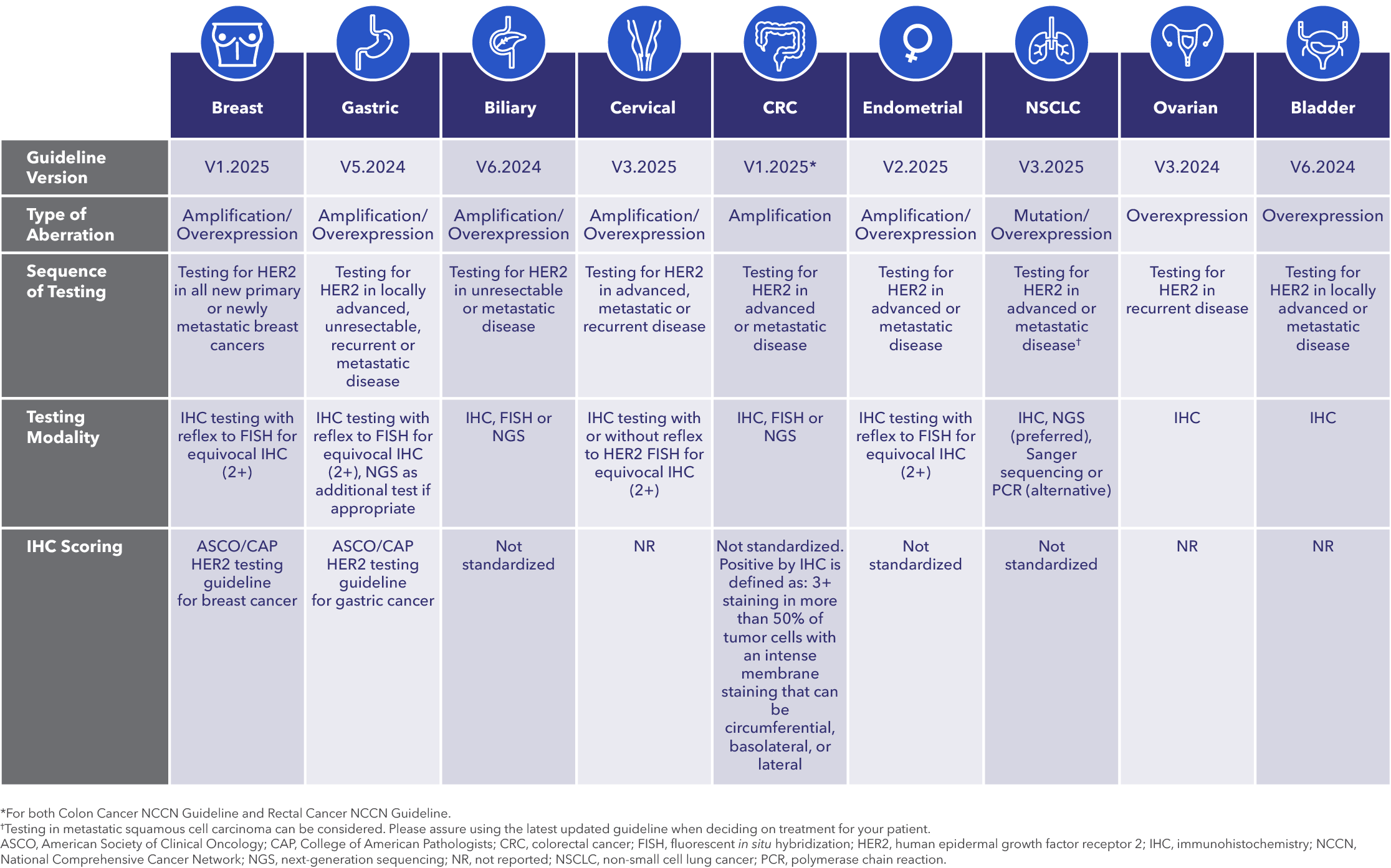
Table 1. Summary of NCCN guidelines on HER2 evaluation by cancer type7,8,10-177. National Comprehensive Cancer Network. NCCN Clinical Practice Guidelines in Oncology – Gastric Cancer Version 5.2024.
8. National Comprehensive Cancer Network. NCCN Clinical Practice Guidelines in Oncology – Breast Cancer Version 1.2025.
10. National Comprehensive Cancer Network. NCCN Clinical Practice Guidelines in Oncology – Billiary Tract Cancers Version 6.2024.
11. National Comprehensive Cancer Network. NCCN Clinical Practice Guidelines in Oncology – Bladder Tract Cancers Version 6.2024.
12. National Comprehensive Cancer Network. NCCN Clinical Practice Guidelines in Oncology – Cervical Cancer Version 3.2025.
13. National Comprehensive Cancer Network. NCCN Clinical Practice Guidelines in Oncology – Colon Cancer Version 1.2025.
14. National Comprehensive Cancer Network. NCCN Clinical Practice Guidelines in Oncology – Rectal Cancer Version 1.2025.
15. National Comprehensive Cancer Network. NCCN Clinical Practice Guidelines in Oncology – Uterine Neoplasms Version 2.2025.
16. National Comprehensive Cancer Network. NCCN Clinical Practice Guidelines in Oncology – Non-Small Cell Lung Cancer Version 3.2025.
17. National Comprehensive Cancer Network. NCCN Clinical Practice Guidelines in Oncology – Ovarian Cancer Including Fallopian Tube Cancer and Primary Peritoneal Cancer Version 3.2024.
Breast cancer: ASCO/CAP HER2 IHC scoring guidelines
Guidelines from ASCO/CAP classify HER2 IHC staining in breast cancer using identical criteria for biopsy and surgical specimens (Figure 1).55. Wolff AC, et al. J Clin Oncol. 2023;41(22):3867–72. Samples with an IHC 0 or IHC 1+ score are considered HER2-negative and those with an IHC 3+ score are HER2-positive. However, those with an IHC 2+ score are considered equivocal and should be re-confirmed by reflex ISH; IHC 2+ with a negative reflex ISH or negative test of a new specimen being HER2-negative and IHC 2+ with a positive reflex ISH being HER2-positive.55. Wolff AC, et al. J Clin Oncol. 2023;41(22):3867–72. For a discussion of the implications of HER2 IHC scoring on therapeutic options in breast cancer, please refer to the second article in this series, Redefining HERness: HER2-low and ultralow breast cancers.
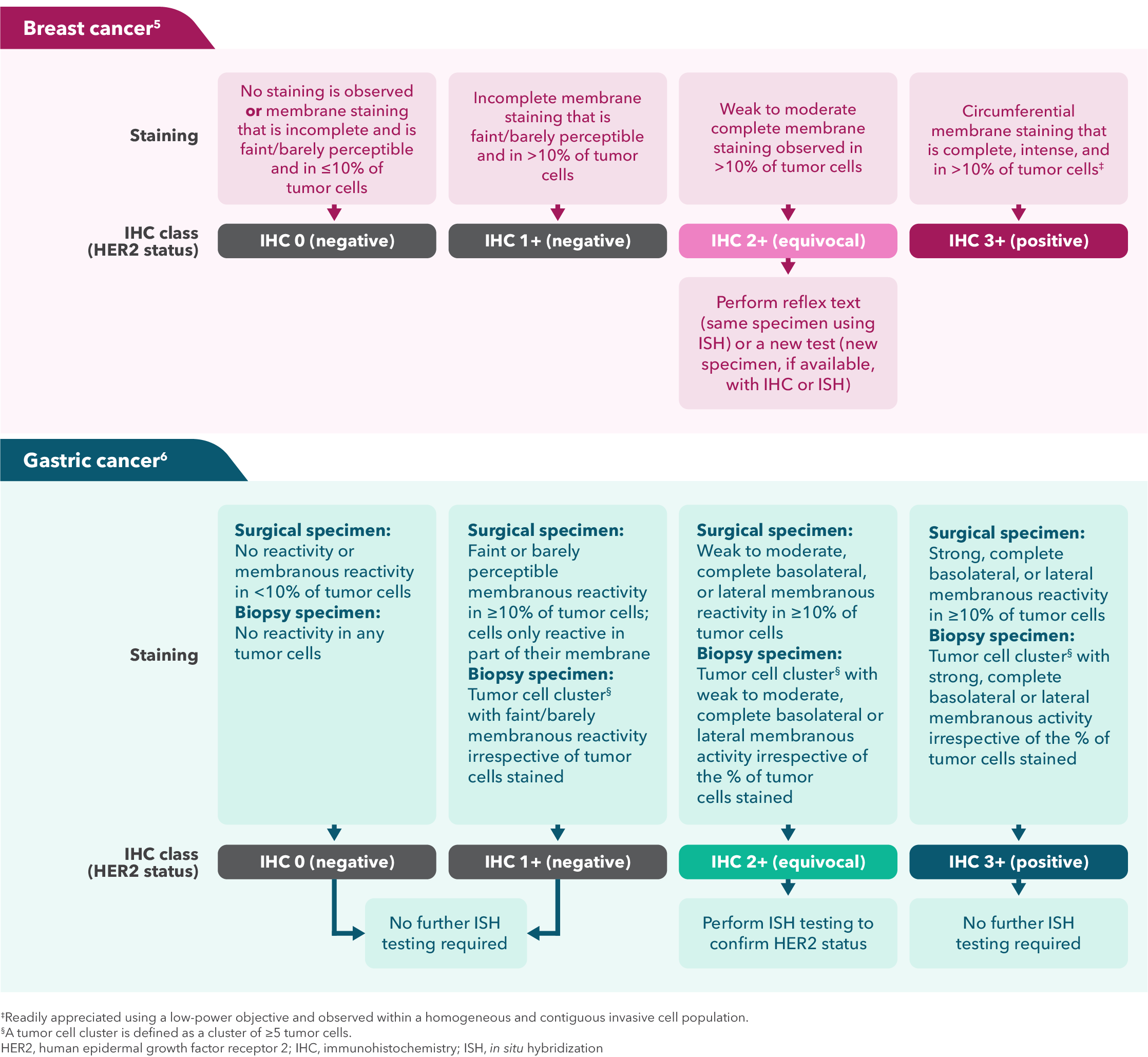
Figure 1. Scoring criteria for the evaluation of HER2 expression status by IHC in breast cancer and gastric cancer5,65. Wolff AC, et al. J Clin Oncol. 2023;41(22):3867–72.
6. Bartley AN, et al. J Clin Oncol. 2017;35(4):446–64.
Gastric cancer: ASCO/CAP HER2 IHC scoring guidelines
Unlike breast cancer scoring guidelines, the ASCO/CAP/American Society for Clinical Pathology (ASCP) HER2 Testing and Clinical Decision Making Guideline for gastric cancer specifies different IHC scoring criteria for surgical vs. biopsy tissue samples (Figure 1).66. Bartley AN, et al. J Clin Oncol. 2017;35(4):446–64. Like the ASCO/CAP breast cancer guidelines, specimens classed as IHC 0 and IHC 1+ are negative, IHC 3+ is positive, and reflex ISH is used to determine the status of equivocal IHC 2+ specimens.66. Bartley AN, et al. J Clin Oncol. 2017;35(4):446–64.
Breast cancer vs. gastric cancer HER2 IHC scoring differences
Breast cancer and gastric cancer are the only two tumor types with specific IHC scoring criteria5,65. Wolff AC, et al. J Clin Oncol. 2023;41(22):3867–72.
6. Bartley AN, et al. J Clin Oncol. 2017;35(4):446–64., but due to the inherent differences in breast and gastric tumor biology1919. Abrahao-Machado LF & Scapulatempo-Neto C. World J Gastroenterol. 2016;22(19):4619–25., the IHC scoring criteria as defined by ASCO/CAP differ between these two tumor types (Table 2).5,6,205. Wolff AC, et al. J Clin Oncol. 2023;41(22):3867–72.
6. Bartley AN, et al. J Clin Oncol. 2017;35(4):446–64.
20. Rüschoff J, et al. Mod Pathol. 2012;25(5):637–50.Compared with breast cancer, gastric cancer more frequently shows HER2 heterogeneity (focal staining) and incomplete membrane antibody distribution (Figure 2).1919. Abrahao-Machado LF & Scapulatempo-Neto C. World J Gastroenterol. 2016;22(19):4619–25. Intratumoral heterogeneity characterized by varying HER2 expression levels within the same tumor is uncommon in breast cancer but frequently observed in gastric cancer.1919. Abrahao-Machado LF & Scapulatempo-Neto C. World J Gastroenterol. 2016;22(19):4619–25. Moreover, in gastric cancer there is a variation in the incidence of HER2 expression with the anatomic location of tumor; the incidence being higher in the proximal stomach, including the GEJ, than in the distal stomach; such variation is not present in breast cancer which has a homogenous distribution.1919. Abrahao-Machado LF & Scapulatempo-Neto C. World J Gastroenterol. 2016;22(19):4619–25. Due to these differences, if the breast cancer IHC scoring criteria were applied to gastric cancer, up to half of such gastric cancer specimens would be incorrectly assessed as HER2-negative, rendering these patients ineligible for potentially life-saving HER2-directed therapies.2020. Rüschoff J, et al. Mod Pathol. 2012;25(5):637–50.
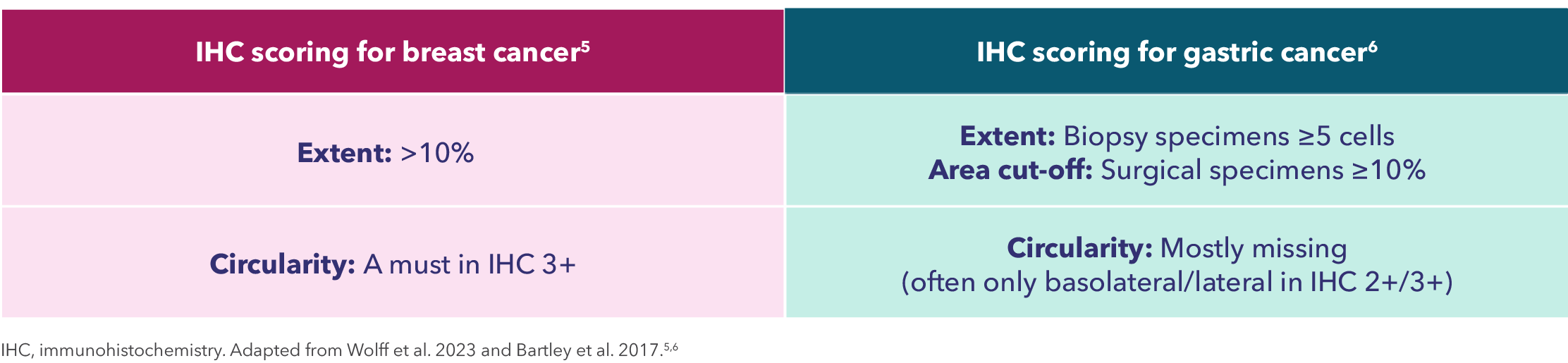
Table 2. Differences in IHC scoring for breast cancer and gastric cancer
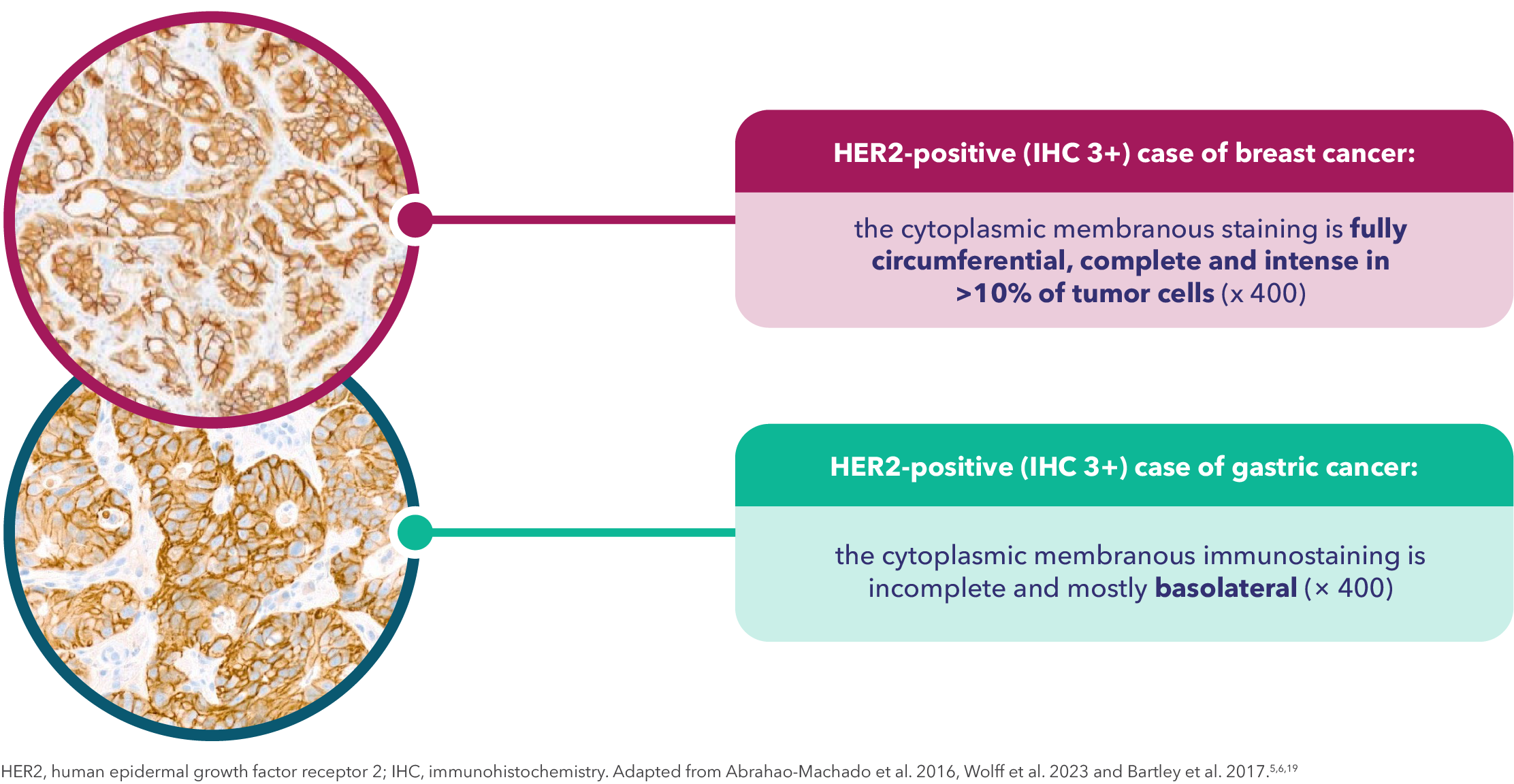
Figure 2. Examples of HER2-positive (IHC 3+) specimens of breast and gastric cancer
HER2 IHC scoring adaptation in other cancer types
With the expansion of HER2-directed therapies towards tumor-agnostic indications44. US Food and Drug Administration. Available online. https://www.fda.gov/drugs/resources-information-approved-drugs/fda-grants-accelerated-approval-fam-trastuzumab-deruxtecan-nxki-unresectable-or-metastatic-her2. Last accessed: 18 June 2024., there is a need for formal guidance on HER2 IHC scoring criteria in tumors other than breast cancer and gastric cancer. Several studies in various cancer types investigating HER2-directed therapies adapted the existing ASCO/CAP breast cancer and gastric cancer HER2 IHC scoring criteria for both patient selection and evaluation of the usefulness of such testing algorithms in other solid tumors.1,21-241. Oh DY & Bang YJ. Nat Rev Clin Oncol. 2020;17(1):33–48.
21. Cercek A, et al. J Clin Oncol. 2023;41(suppl 4):198.
22. Chao WR, et al. Virchows Arch. 2022;480(5):1023–30.
23. Lei H, et al. J Natl Cancer Cent. 2023;3(2):121–8.
24. Lei H, et al. J Natl Cancer Cent. 2023;3(2):121–8.
Chao et al. evaluated the ASCO/CAP scoring criteria for gastric cancer surgical specimen (2017) and breast cancer (2018) for the assessment of HER2 expression status in ovarian cancer specimens.2222. Chao WR, et al. Virchows Arch. 2022;480(5):1023–30. Both breast cancer and gastric cancer surgical specimen HER2 scoring criteria showed favorable agreement and good overall concordance when applied to ovarian cancer specimens.2222. Chao WR, et al. Virchows Arch. 2022;480(5):1023–30. The number of HER2 IHC 2+ equivocal ovarian cancer specimens was twofold higher using gastric cancer criteria (n=8; 16.32%) compared with breast cancer criteria (n=4; 8.16%).2222. Chao WR, et al. Virchows Arch. 2022;480(5):1023–30. Additionally, one false-positive case (HER2 IHC 3+ but FISH non-amplified) was identified when using gastric cancer criteria.2222. Chao WR, et al. Virchows Arch. 2022;480(5):1023–30. The authors concluded that the ASCO/CAP guidelines for breast cancer were more appropriate than those for surgical specimens of gastric cancer for the evaluation of HER2 expression in mucinous ovarian cancer, based on absence of false-positive and false-negative cases and fewer equivocal cases resulting in a lower need for reflex FISH testing.2222. Chao WR, et al. Virchows Arch. 2022;480(5):1023–30.
Similarly, Lei et al. reported the use of the ASCO/CAP 2018 HER2 scoring system for breast cancer with minor modifications (revised IHC 2+ definition: 1. weak to moderate complete membrane staining observed in ≥10% of tumor cells or 2. circumferential membrane staining that is complete, intense, and in <10% of tumor cells) in a study of patients with urothelial carcinoma treated with a HER2-directed ADC.[mfn referencenumber=23]23. Lei H, et al. J Natl Cancer Cent. 2023;3(2):121–8.[/mfn] The authors noted that some urothelial carcinoma samples had both membranous and cytoplasmic expression of HER2, which was confirmed to be HER2-positive by FISH.2323. Lei H, et al. J Natl Cancer Cent. 2023;3(2):121–8. Unlike gastric cancer, complete membranous staining is required for positivity in urothelial carcinoma.2323. Lei H, et al. J Natl Cancer Cent. 2023;3(2):121–8.
Lastly, Meric-Bernstam et al. adopted the ASCO/CAP gastric cancer HER2 IHC scoring to select patients with various solid tumor types for HER2-directed therapy.2424. Meric-Bernstam F, et al. J Clin Oncol. 2023;42(1):47–58. Clinical benefits were demonstrated in these patients, showing that HER2 gastric cancer scoring criteria were effective in identifying pan-tumor patients who could benefit from HER2-directed treatment.2424. Meric-Bernstam F, et al. J Clin Oncol. 2023;42(1):47–58. Despite previous findings suggesting breast cancer scoring guidelines were more appropriate for mucinous ovarian cancer, pan-tumor patients that could benefit from HER2-directed therapy were identified with gastric cancer scoring criteria paving the way for tumor-agnostic label approval.2424. Meric-Bernstam F, et al. J Clin Oncol. 2023;42(1):47–58.
These findings highlight the importance of selecting appropriate IHC scoring criteria that accurately distinguish patients that could benefit from HER2-directed therapy. Nevertheless, there is a pressing need to establish standardized HER2 IHC scoring guidelines for various tumors to ensure precise evaluation of HER2 status and to guide treatment decisions across a broader range of cancers.
Summary
Oncology expert groups now recommend HER2-directed therapies for a range of different cancer types.10-1710. Zhu K, et al. Biomark Res. 2024:12(1):16.
11. National Comprehensive Cancer Network. NCCN Clinical Practice Guidelines in Oncology – Biliary Tract Cancers Version 3.2024.
12. National Comprehensive Cancer Network. NCCN Clinical Practice Guidelines in Oncology – Bladder Cancer Version 4.2024.
13. National Comprehensive Cancer Network. NCCN Clinical Practice Guidelines in Oncology – Cervical Cancer Version 3.2024.
14. National Comprehensive Cancer Network. NCCN Clinical Practice Guidelines in Oncology – Colon Cancer Version 4.2024.
15. National Comprehensive Cancer Network. NCCN Clinical Practice Guidelines in Oncology – Uterine Neoplasms Version 2.2024.
16. National Comprehensive Cancer Network. NCCN Clinical Practice Guidelines in Oncology – Non-Small Cell Lung Cancer Version 9.2024.
17. National Comprehensive Cancer Network. NCCN Clinical Practice Guidelines in Oncology – Ovarian Cancer Including Fallopian Tube Cancer and Primary Peritoneal Cancer Version 3.2024. However, detailed guidance on the interpretation of IHC staining of biopsy or surgical specimens is only available for breast cancer and gastric cancer.5,65. Wolff AC, et al. J Clin Oncol. 2023;41(22):3867–72.
6. Bartley AN, et al. J Clin Oncol. 2017;35(4):446–64. With the advancement of therapeutic options for HER2-positive cancers, guidelines for HER2 IHC scoring in cancer types other than breast cancer and gastric cancer are an unmet medical need to be addressed to ensure the appropriate use of HER2-directed therapies.1818. Uzunparmak B, et al. Ann Oncol. 2023;34(11):1035–46.
References
- Oh DY & Bang YJ. Nat Rev Clin Oncol. 2020;17(1):33–48.
- Iqbal N & Iqbal N. Mol Biol Int. 2014;2014:852748.
- Chmielecki J, et al. Oncologist. 2015;20(1):7–12.
- US Food and Drug Administration. Available online. https://www.fda.gov/drugs/resources-information-approved-drugs/fda-grants-accelerated-approval-fam-trastuzumab-deruxtecan-nxki-unresectable-or-metastatic-her2. Last accessed: 18 June 2024.
- Wolff AC, et al. J Clin Oncol. 2023;41(22):3867–72.
- Bartley AN, et al. J Clin Oncol. 2017;35(4):446–64.
- National Comprehensive Cancer Network. NCCN Clinical Practice Guidelines in Oncology – Gastric Cancer Version 5.2024.
- National Comprehensive Cancer Network. NCCN Clinical Practice Guidelines in Oncology – Breast Cancer Version 1.2025.
- Zhu K, et al. Biomark Res. 2024;12(1):16.
- National Comprehensive Cancer Network. NCCN Clinical Practice Guidelines in Oncology – Billiary Tract Cancers Version 6.2024.
- National Comprehensive Cancer Network. NCCN Clinical Practice Guidelines in Oncology – Bladder Tract Cancers Version 6.2024.
- National Comprehensive Cancer Network. NCCN Clinical Practice Guidelines in Oncology – Cervical Cancer Version 3.2025.
- National Comprehensive Cancer Network. NCCN Clinical Practice Guidelines in Oncology – Colon Cancer Version 1.2025.
- National Comprehensive Cancer Network. NCCN Clinical Practice Guidelines in Oncology – Rectal Cancer Version 1.2025.
- National Comprehensive Cancer Network. NCCN Clinical Practice Guidelines in Oncology – Uterine Neoplasms Version 2.2025.
- National Comprehensive Cancer Network. NCCN Clinical Practice Guidelines in Oncology – Non-Small Cell Lung Cancer Version 3.2025.
- National Comprehensive Cancer Network. NCCN Clinical Practice Guidelines in Oncology – Ovarian Cancer Including Fallopian Tube Cancer and Primary Peritoneal Cancer Version 3.2024.
- Uzunparmak B, et al. Ann Oncol. 2023;34(11):1036–46.
- Abrahao-Machado LF & Scapulatempo-Neto C. World J Gastroenterol. 2016;22(19):4619–25.
- Rüschoff J, et al. Mod Pathol. 2012;25(5):637–50.
- Cercek A, et al. J Clin Oncol. 2023;41(suppl 4):198.
- Chao WR, et al. Virchows Arch. 2022;480(5):1023–30.
- Lei H, et al. J Natl Cancer Cent. 2023;3(2):121–8.
- Meric-Bernstam F, et al. J Clin Oncol. 2023;42(1):47–58.
The article is sponsored by Daiichi Sankyo and AstraZeneca.
MED-HK-TRAS-00066 HK-11557 02/2025
Disclaimer
This article is not medical advice. Patients should seek personal assessment by a licenced specialist. Physicians are recommended to read the full publication(s) as cited in the article before making medical decisions. This article does not supersede nor replace the published article(s).
© Copyright 2024 MediPaper Medical Communications Ltd. – Decoding HER2 IHC Scoring Guidelines: Understanding Immunohistochemistry Scoring in Different Cancers

