![Medical News Asia | Powered by ['mediPr]](https://medi-paper.com/wp-content/uploads/2020/02/MediPR-MediPaper-Medical-Communications-Ltd-Healthcare-Writers-Medical-Writers-Medical-Writer-Agency-Hong-Kong-Medical-Writing-Services-Solutions-Quote-醫學寫作-香港-醫學作家香港-medical-PR-public-relations-1030x374.png)
Last updated: 14 April 2025 | In: HER2 Explorer
Introduction
Apart from Human Epidermal Growth Factor Receptor 2 (HER2) gene amplification or receptor protein overexpression (discussed in Article 1 and Article 3), dysregulation of HER2 activity may also be caused by HER2 gene mutations.11. Arteaga CL & Engelman JA. Cancer Cell. 2014;25(3):282–303. Approximately 90% of the mutations are clustered in the extracellular dimerization domain and intracellular kinase domain, with the remainder occurring within the juxtamembrane or transmembrane domains.1,21. Arteaga CL & Engelman JA. Cancer Cell. 2014;25(3):282–303.
2. Cocco E, et al. Pharmacol Ther. 2019;199:188–96.
HER2 mutations have been reported in lung cancer, breast cancer, bladder cancer, gastric cancer, colorectal cancer and gynecological cancers (Figure 1).1,21. Arteaga CL & Engelman JA. Cancer Cell. 2014;25(3):282–303.
2. Cocco E, et al. Pharmacol Ther. 2019;199:188–96. Although not all mutations in HER2 are activating, missense and in-frame insertions in the kinase domain can increase kinase activity and promote tumorigenesis.33. Meric-Bernstam F, et al. Clin Cancer Res. 2019;25(7):2033–41. Additionally, activating mutations in the transmembrane domain have been reported.33. Meric-Bernstam F, et al. Clin Cancer Res. 2019;25(7):2033–41. These mutations are clinically actionable, with HER2-directed therapy showing durable antitumor activity across multiple solid tumor types with activating HER2 mutations.44. Li BT, et al. Lancet Oncol. 2024;25(6):707–19.

Figure 1. Distribution of common HER2 mutations in solid tumors
Prevalence and clinical significance of HER2 mutations across solid tumors
The prevalence of HER2 mutations may vary between different cancer types. Studies have found that bladder cancer has the highest prevalence of HER2 mutations, followed by gastric cancer, cervical cancer, colorectal cancer, lung cancer and breast cancer (Figure 2).2,52. Cocco E, et al. Pharmacol Ther. 2019;199:188–96.
5. Oh DY & Bang YJ. Nat Rev Clin Oncol. 2020;17(1):33–48. Besides, HER2 mutations also have implications for disease progression and treatment sensitivity across several solid tumor types, as shown by both animal models and clinical data (Table 1).22. Cocco E, et al. Pharmacol Ther. 2019;199:188–96. For example, in breast cancer, data suggest the emergence of HER2 mutations may be a mechanism of acquired endocrine resistance, and use of a HER2-directed agent in such patients may partially restore sensitivity to endocrine therapies.22. Cocco E, et al. Pharmacol Ther. 2019;199:188–96. Indeed, case studies of patients with HER2-mutant breast cancer have shown positive responses to several regimens containing HER2-directed agents, including monoclonal antibodies (mAb[s]) combined with endocrine therapy, mAb(s) plus a HER2 tyrosine kinase inhibitor (TKI) or TKI monotherapy.22. Cocco E, et al. Pharmacol Ther. 2019;199:188–96.
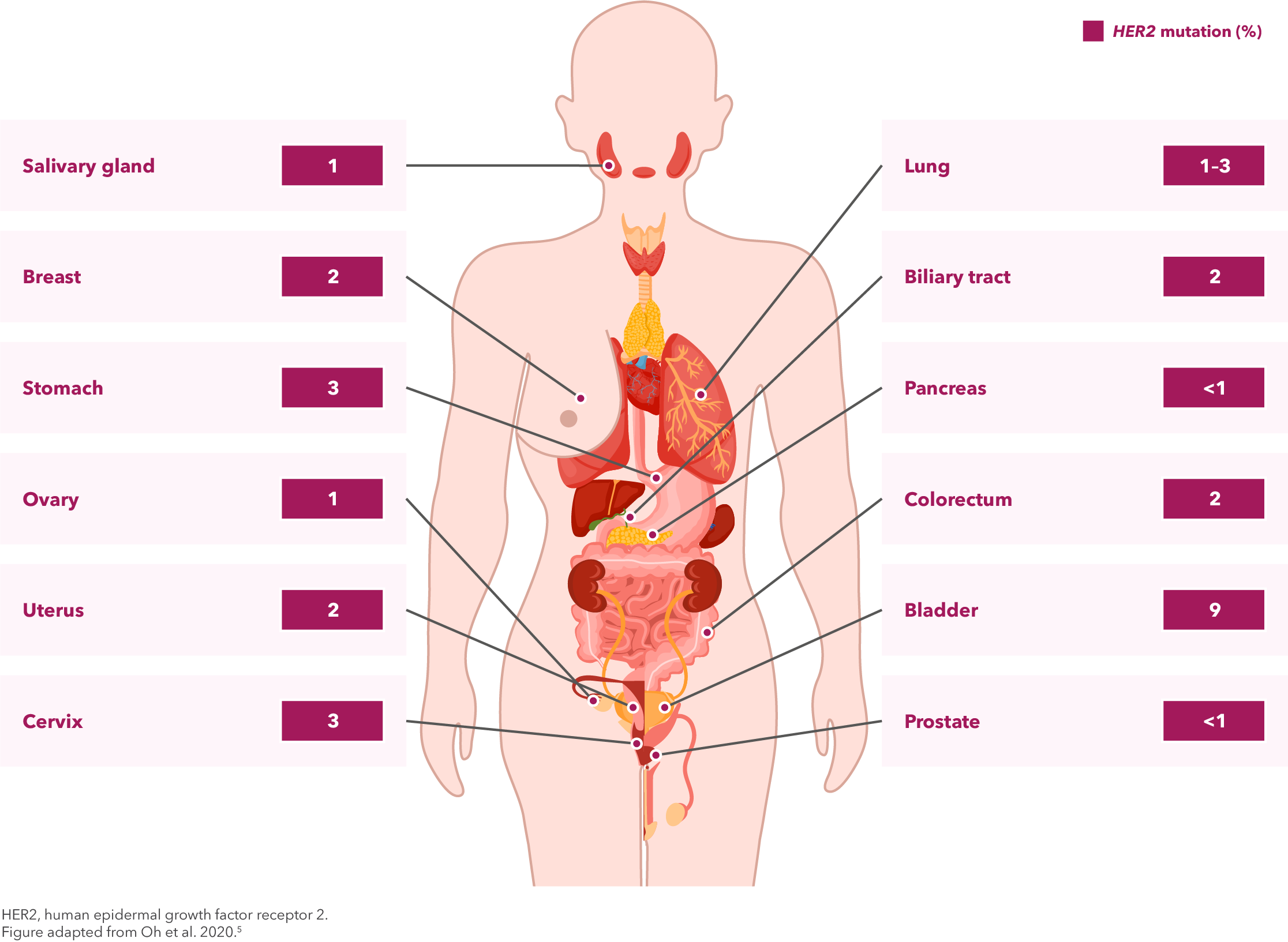
Figure 2. Prevalence of HER2 mutations across solid tumors
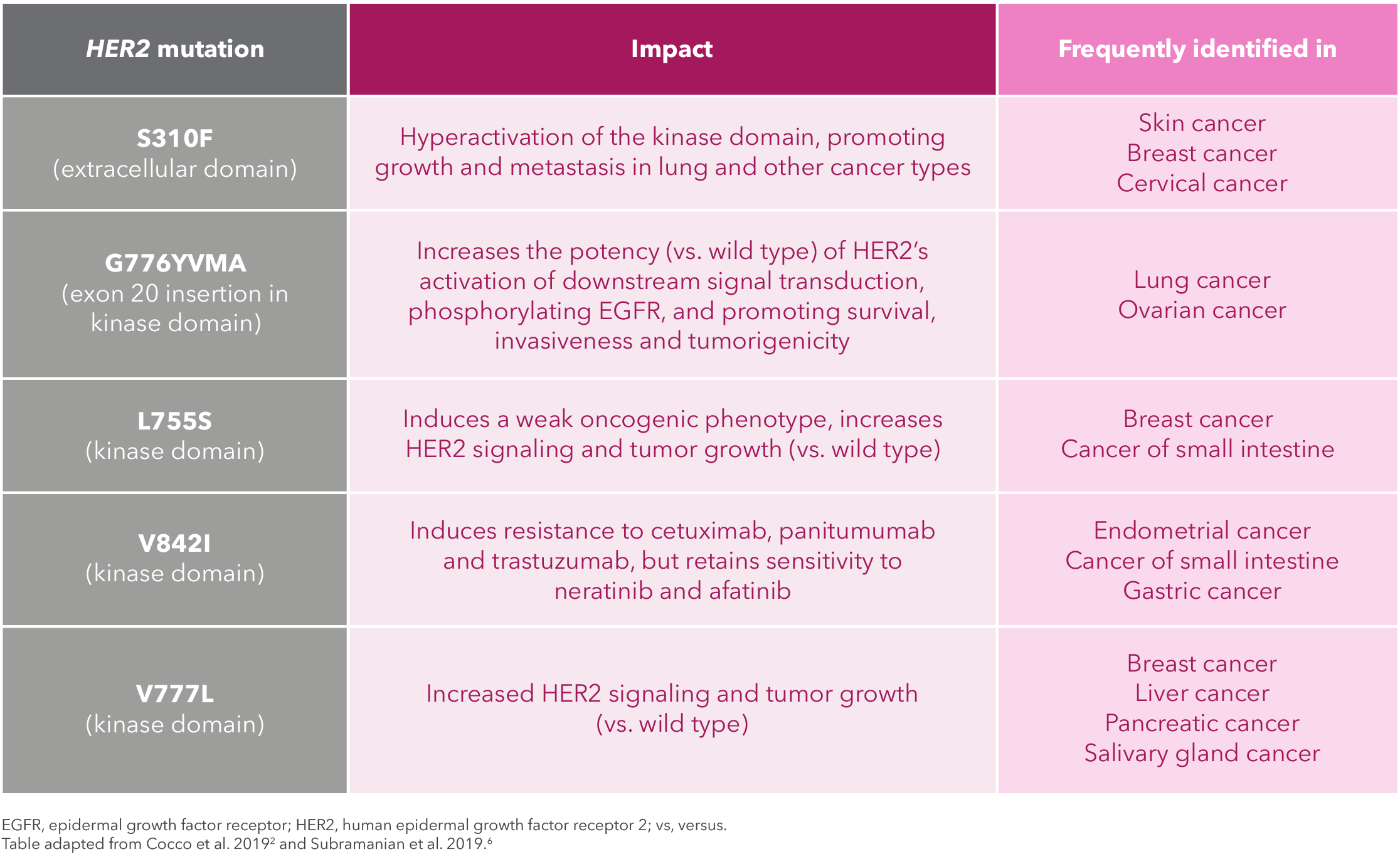
Table 1. Selected examples of HER2 mutations and their impact
HER2 mutations in non-small cell lung cancer (NSCLC)
Lung cancer was the first tumor type in which HER2 mutations were described with a prevalence of around 1–4% according to various reports.2,52. Cocco E, et al. Pharmacol Ther. 2019;199:188–96.
5. Oh DY & Bang YJ. Nat Rev Clin Oncol. 2020;17(1):33–48. HER2 mutations can occur in both squamous cell carcinomas and adenocarcinomas of the lung.22. Cocco E, et al. Pharmacol Ther. 2019;199:188–96. Exon 20 insertions (Exon20ins) in the kinase domain account for >90% of HER2 mutations in NSCLC, with the insertion/duplication of G776YVMA accounting for 83% of these Exon20ins cases.77. Riudavets M, et al. ESMO Open. 2021;6(5):100260. Similar to the more common epidermal growth factor receptor (EGFR) mutations that frequently occur in NSCLC88. Mok TS, et al. N Eng J Med. 2009;361(10):947–57., HER2 mutations are also most frequently reported in patients who are Asian, female, never-smokers and have an adenocarcinoma subtype.33. Meric-Bernstam F, et al. Clin Cancer Res. 2019;25(7):2033–41. However, this does not necessarily mean that only these characteristics should be used to select candidates for HER2 mutation testing.99. National Comprehensive Cancer Network. NCCN Clinical Practice Guidelines in Oncology – Non-Small Cell Lung Cancer Version 3.2025. It is noteworthy that HER2 mutations usually are mutually exclusive with activating mutations in other oncogenic drivers, e.g. EGFR, KRAS, BRAF, NRAS, PIK3CA mutations, ROS1 fusion as well as ALK rearrangements.3,10,113. Meric-Bernstam F, et al. Clin Cancer Res. 2019;25(7):2033–41.
10. Uy NF, et al. Cancers (Basel). 2022;14(17):4155.
11. Zeng J, et al. J Natl Cancer Cent. 2021;1(2):58–73.
Initially, the presence of HER2 mutations was associated with higher rates of brain metastases and worse outcomes when treated with chemotherapy or HER2-directed therapy compared with other driver mutations, possibly aided by the lack of patient selection.1010. Uy NF, et al. Cancers (Basel). 2022;14(17):4155. However, recent studies revealed that HER2 mutations (for example, S310F and L755S) may actually confer an advantage in treatment response through increased internalization rates of cytotoxic agents compared to wild-type HER2.1212. Li BT, et al. Cancer Discov. 2020;10(5):674–87. With newer HER2-directed agents available, studies are now showing prolonged survival in this subset of patients.1313. Rosner S, et al. Am Soc Clin Oncol Educ Book. 2023;43:e389968. The National Comprehensive Cancer Network (NCCN) guidelines now recommend such therapies as a second-line option for metastatic NSCLC with activating HER2 mutations.99.National Comprehensive Cancer Network. NCCN Clinical Practice Guidelines in Oncology – Non-Small Cell Lung Cancer Version 3.2025. Several other novel HER2-directed agents are in early-stage clinical development for HER2-mutated NSCLC.1313. Rosner S, et al. Am Soc Clin Oncol Educ Book. 2023;43:e389968.
Recommendations for HER2 MUTATION TESTING in NSCLC
Despite the well-documented role of HER2 as an oncogenic driver, and the routine clinical testing for HER2 aberrations in several cancer types3,14,153. Meric-Bernstam F, et al. Clin Cancer Res. 2019;25(7):2033–41.
14. Bartley AN, et al. J Clin Oncol. 2017;35(4):446–64.
15. Wolff AC, et al. J Clin Oncol. 2018;36(20):2105–22., testing for HER2 mutations remains an emerging diagnostic test that is currently primarily recommended for NSCLC99. National Comprehensive Cancer Network. NCCN Clinical Practice Guidelines in Oncology – Non-Small Cell Lung Cancer Version 3.2025., but not in other solid tumors (Figure 3). Current guidelines for NSCLC from the NCCN, European Society for Medical Oncology (ESMO) and American Society of Clinical Oncology (ASCO) recommend testing for HER2 mutations as part of a multigene panel of actionable mutations, preferably using next-generation sequencing (NGS). If NGS is unavailable, Sanger sequencing or polymerase chain reaction-based methods can be used instead.9,16,179. National Comprehensive Cancer Network. NCCN Clinical Practice Guidelines in Oncology – Non-Small Cell Lung Cancer Version 3.2025.
16. Hendriks LE, et al. Ann Oncol. 2023;34(4):339–57.
17. Kalemkerian GP, et al. J Oncol Pract. 2018;14(5):323–7.
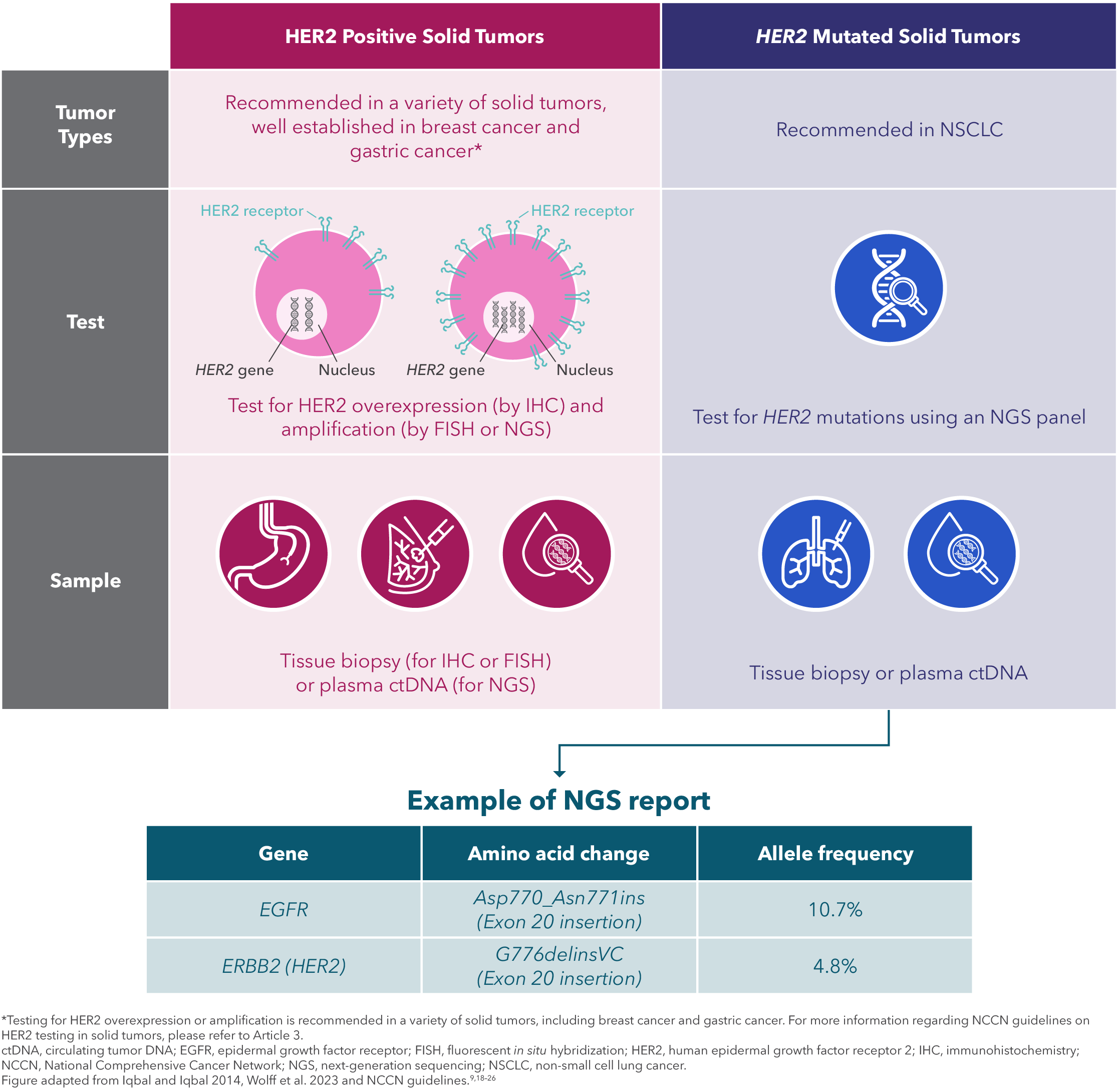
Figure 3. Comparison of HER2 testing approaches in HER2 positive and HER2 mutated solid tumors
Usually, a tissue biopsy specimen is preferred for testing, but liquid biopsy, also known as plasma circulating tumor DNA (ctDNA) may be used for some patients.99. National Comprehensive Cancer Network. NCCN Clinical Practice Guidelines in Oncology – Non-Small Cell Lung Cancer Version 3.2025. However, plasma ctDNA is not recommended in settings other than advanced/metastatic disease and should not be used in lieu of a histologic tissue diagnosis.99. National Comprehensive Cancer Network. NCCN Clinical Practice Guidelines in Oncology – Non-Small Cell Lung Cancer Version 3.2025. Testing of plasma ctDNA may also be a suitable option if patients are unfit for invasive tissue sampling, or if there is insufficient tissue for molecular analysis. Follow-up tissue-based analysis will be done if an oncogenic driver cannot be identified by using plasma ctDNA.99. National Comprehensive Cancer Network. NCCN Clinical Practice Guidelines in Oncology – Non-Small Cell Lung Cancer Version 3.2025.
Summary
HER2 mutations are found across multiple solid tumor types and may be associated with increased HER2 signaling and tumorigenicity.22. Cocco E, et al. Pharmacol Ther. 2019;199:188–96. In NSCLC, HER2 mutations are an emerging biomarker and should ideally be evaluated using NGS as part of a panel of actionable mutations.99. National Comprehensive Cancer Network. NCCN Clinical Practice Guidelines in Oncology – Non-Small Cell Lung Cancer Version 3.2025. HER2-directed therapies are recommended for the second-line treatment of HER2-mutant metastatic NSCLCs99. National Comprehensive Cancer Network. NCCN Clinical Practice Guidelines in Oncology – Non-Small Cell Lung Cancer Version 3.2025., and the clinical development of novel HER2-directed options is ongoing.10,1310. Uy NF, et al. Cancers (Basel). 2022;14(17):4155.
13. Rosner S, et al. Am Soc Clin Oncol Educ Book. 2023;43:e389968.
References
- Arteaga CL & Engelman JA. Cancer Cell. 2014;25(3):282–303.
- Cocco E, et al. Pharmacol Ther. 2019;199:188–96.
- Meric-Bernstam F, et al. Clin Cancer Res. 2019;25(7):2033–41.
- Li BT, et al. Lancet Oncol. 2024;25(6):707–19.
- Oh DY & Bang YJ. Nat Rev Clin Oncol. 2020;17(1):33–48.
- Subramanian J, et al. Oncologist. 2019;24(12):e1303–14.
- Riudavets M, et al. ESMO Open. 2021;6(5):100260.
- Mok TS, et al. N Eng J Med. 2009;361(10):947–57.
- National Comprehensive Cancer Network. NCCN Clinical Practice Guidelines in Oncology – Non-Small Cell Lung Cancer Version 3.2025.
- Uy NF, et al. Cancers (Basel). 2022;14(17):4155.
- Zeng J, et al. J Natl Cancer Cent. 2021;1(2):58–73.
- Li BT, et al. Cancer Discov. 2020;10(5):674–87.
- Rosner S, et al. Am Soc Clin Oncol Educ Book. 2023;43:e389968.
- Bartley AN, et al. J Clin Oncol. 2017;35(4):446–64.
- Wolff AC, et al. J Clin Oncol. 2018;36(20):2105–22.
- Hendriks LE, et al. Ann Oncol. 2023;34(4):339–57.
- Kalemkerian GP, et al. J Oncol Pract. 2018;14(5):323–7.
- Iqbal N & Iqbal N. Mol Biol Int. 2014;2014:852748.
- National Comprehensive Cancer Network. NCCN Clinical Practice Guidelines in Oncology – Gastric Cancer Version 5.2024.
- Wolff AC, et al. J Clin Oncol. 2023;41(22):3867–72.
- National Comprehensive Cancer Network. NCCN Clinical Practice Guidelines in Oncology – Breast Cancer Version 3.2025.
- National Comprehensive Cancer Network. NCCN Clinical Practice Guidelines in Oncology – Billiary Tract Cancers Version 1.2025.
- National Comprehensive Cancer Network. NCCN Clinical Practice Guidelines in Oncology – Cervical Cancer Version 4.2025.
- National Comprehensive Cancer Network. NCCN Clinical Practice Guidelines in Oncology – Colon Cancer Version 1.2025.
- National Comprehensive Cancer Network. NCCN Clinical Practice Guidelines in Oncology – Rectal Cancer Version 1.2025.
- National Comprehensive Cancer Network. NCCN Clinical Practice Guidelines in Oncology – Uterine Neoplasms Version 3.2025.
The article is sponsored by Daiichi Sankyo and AstraZeneca.
MED-HK-TRAS-00083 HK-11704 04/2025
Disclaimer
This article is not medical advice. Patients should seek personal assessment by a licenced specialist. Physicians are recommended to read the full publication(s) as cited in the article before making medical decisions. This article does not supersede nor replace the published article(s).
© Copyright 2025 MediPaper Medical Communications Ltd. – Prevalence and role of HER2 driver mutations in cancers

